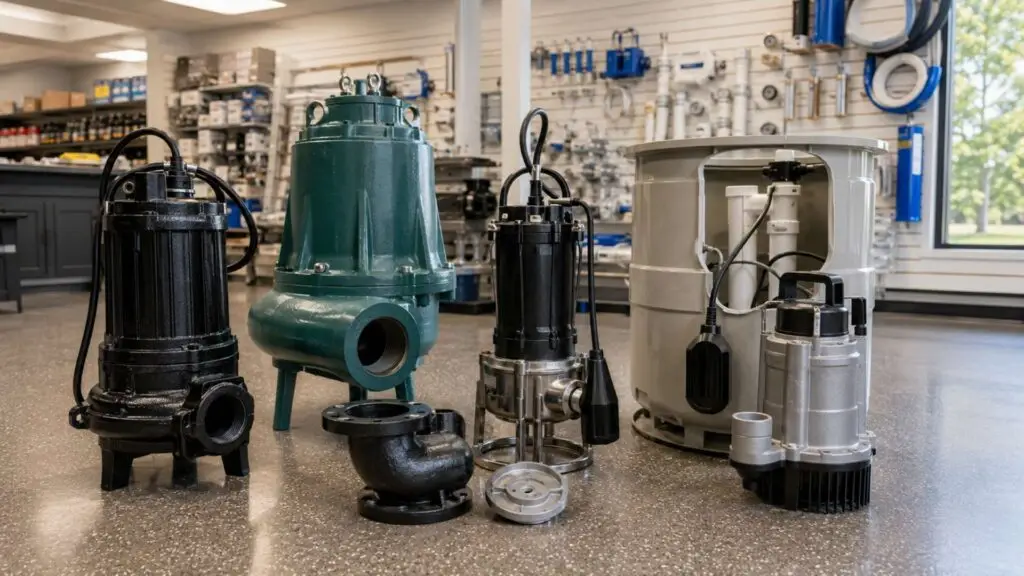
Wastewater applications often require pumps, but not all pumps are designed to do the same job. Sewage pumps, effluent pumps, and grinder pumps may all be used in wastewater systems, but each one is built for a different type of application.
Choosing the wrong pump can lead to poor performance, clogs, premature failure, or system problems. For contractors, understanding the difference between these pump types is an important part of selecting the right equipment.
A sewage pump is designed to move wastewater that may contain solids. These pumps are commonly used in residential, commercial, and light industrial sewage applications. They are often installed in basins or lift stations where wastewater needs to be pumped to a sewer line, septic system, or higher elevation.
The key feature of a sewage pump is its solids-handling capability. Depending on the pump, it may be able to pass certain sizes of solids without grinding them. The correct sewage pump should be selected based on flow requirements, head, discharge size, solids-handling capacity, basin design, and electrical requirements.
Effluent pumps are different. An effluent pump is typically used to move filtered or partially treated wastewater. These pumps are commonly used in septic systems, dosing systems, mound systems, and other applications where the liquid has already passed through a septic tank or filtration stage.
Effluent pumps generally move cleaner water than sewage pumps, though the liquid is still wastewater. Because of this, they may not be designed to handle the same type or size of solids as a sewage pump. Using an effluent pump in the wrong application can cause clogging or damage.
Grinder pumps are designed for more demanding wastewater applications in which solids must be reduced before being pumped through smaller-diameter piping or over longer distances. A grinder pump uses a cutting mechanism to grind solids into a slurry before discharge.
Grinder pumps are often used where gravity sewer service is not available or where wastewater must be pumped through a pressurized sewer system. They can be useful in certain residential, commercial, or municipal applications, but they need to be selected carefully.
One of the biggest mistakes contractors can make is assuming that more power automatically means a better pump. Pump selection should not be based on horsepower alone. The system’s needs matter more. Flow rate, total dynamic head, solids handling, discharge piping, basin size, duty cycle, controls, and power supply must all be considered.
Another important factor is serviceability. Pumps in wastewater systems will eventually need maintenance or replacement. Contractors should think about how easily the pump can be accessed, removed, and serviced. Proper valves, disconnects, guide rails, alarms, and controls can make a major difference.
Controls also play a role. Sewage, effluent, and grinder pump systems may use floats, control panels, alarms, check valves, and other components. The pump and control setup should match the application.
Hartsig Supply helps contractors compare pump options and choose equipment that fits the job. Whether a project involves a sewage pump, effluent pump, grinder pump, lift station, or replacement situation, our team can help contractors think through the application.
The right pump depends on what is being pumped, where it needs to go, and how the system is designed. When contractors understand the difference between pump types, they can make better decisions, reduce callbacks, and build systems that perform more reliably.