In a wastewater system, the pump usually gets the most attention. But the pump is only one part of the system. Control panels, floats, and alarms are just as important because they determine when the pump runs, how the system responds to changing water levels, and whether anyone is alerted when something goes wrong.
For contractors, these components should never be treated as afterthoughts. A wastewater system can have the right pump and still fail to operate correctly if the controls are not selected, installed, or adjusted properly.
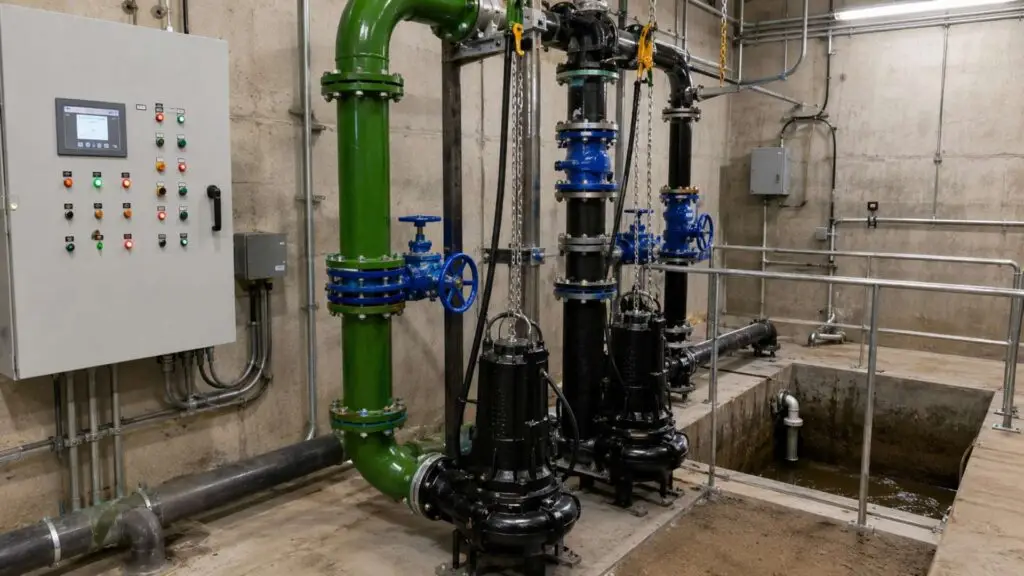
A control panel is the center of many wastewater pump systems. It manages pump operation and can include features such as breakers, starters, overload protection, alternation for duplex pump systems, elapsed time meters, pump run lights, alarm circuits, and other controls.
The control panel needs to match the pump and the application. Voltage, horsepower, phase, amperage, pump count, and control type all matter. Installing the wrong panel or using one that does not meet the system requirements can cause immediate problems or lead to failure over time.
Floats are used to monitor liquid levels in the basin. These floats tell the system when to turn the pump on, when to shut it off, and when to trigger a high-water alarm. In some systems, multiple floats are used to control pump sequencing and provide backup alarm protection.
Float placement is critical. If floats are placed too close together, the pump may short-cycle. If the pump-off float is set too low, the pump may run too long or pull air. If the pump-on float is set too high, the basin may fill beyond its capacity before the pump starts. If the alarm float is set incorrectly, the system may not provide enough warning before a problem becomes serious.
Alarms are one of the most important safety features in wastewater systems. A high-level alarm alerts the owner, facility manager, or maintenance team when the basin level rises too high. Without an alarm, a pump failure, a float issue, a power problem, or a blockage may not be noticed until wastewater backs up or overflows.
Alarms can be local, remote, audible, visual, or connected to monitoring systems, depending on the application. The right alarm setup depends on the level of risk, location, property type, and system requirements.
Contractors should also think about redundancy. In many wastewater applications, especially commercial or higher-risk systems, a duplex pump setup may be used. This allows two pumps to alternate operation and provides backup if one pump fails. The control panel, floats, and alarms all need to support that setup.
Troubleshooting wastewater systems often starts with controls. If a pump is not running, it may not be a pump failure. The issue could be a float, panel, breaker, relay, wiring problem, alarm circuit, or power supply issue. Understanding how the control system works helps contractors diagnose problems faster.
Hartsig Supply supports contractors with control panels, float systems, alarm products, pump components, and troubleshooting guidance. Our team helps contractors choose components that work together and fit the application.
A wastewater pump system is only reliable when the pump, floats, panel, and alarm system are all selected and installed correctly. These components protect the system, reduce the risk of backups, and help contractors deliver a better long-term solution.
For contractors, paying attention to controls is not optional. It is one of the most important parts of building a dependable wastewater system.