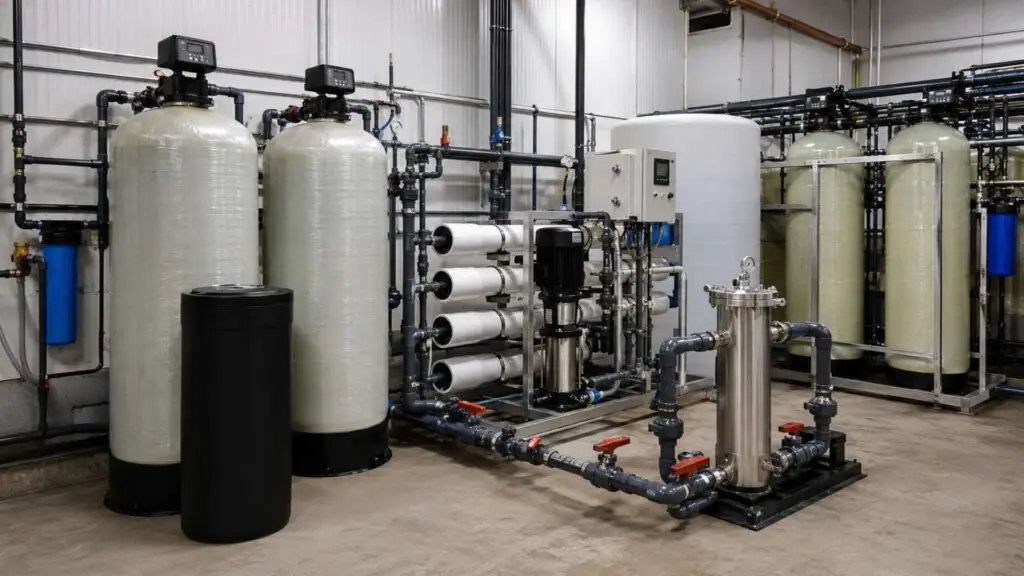
Water treatment works best when the solution is matched to the actual problem. Many customers describe water issues in simple terms: stains, smell, bad taste, cloudy water, spots, or buildup. For contractors, the job is to connect those symptoms to the likely cause and then choose products that fit the application.
Four of the most common water problems are iron, hardness, sediment, and odor. Each can affect water quality, plumbing performance, and customer satisfaction in different ways.
Iron is often easy to spot because it can cause orange, red, or brown staining on fixtures, toilets, tubs, sinks, and laundry. Customers may also notice a metallic taste or discoloration. Iron can be especially common in well water, though it can also show up in other situations.
The right solution for iron depends on the type and level of iron in the water. Some iron may be dissolved and appear clear when first drawn from the tap, then turn color after exposure to air. Other iron may already appear as particles or staining. Treatment may involve oxidation, filtration, specialty media, or other system designs, depending on the water test results.
Hardness is caused mainly by calcium and magnesium. Customers may notice white scale, spots on dishes, dry skin, dull laundry, soap that does not lather well, or buildup in water heaters and appliances. Hard water can also reduce the efficiency and lifespan of equipment.
Water softeners are commonly used to treat hardness. Proper sizing is important. Contractors should consider hardness level, number of people or usage demand, flow rate, plumbing size, and regeneration settings. A softener that is too small may not perform properly. One that is oversized or poorly set up may waste salt and water.
Sediment can show up as sand, grit, dirt, cloudiness, or particles in the water. It can clog fixtures, damage appliances, reduce flow, and interfere with other treatment equipment. Sediment can come from the well, the plumbing system, the water main, or the source water.
Sediment filters capture particles, but filter selection matters. Contractors should consider micron rating, filter type, flow rate, pressure drop, maintenance frequency, and whether the filter protects the whole house or specific equipment. In some cases, heavy sediment may require a more robust solution than a small cartridge filter.
Odor can be one of the most frustrating water problems for customers. A rotten egg smell is often associated with hydrogen sulfide, but the source and treatment approach can vary. Contractors should ask whether the odor appears only in hot water, only in cold water, or in both. If the odor is mainly in hot water, the water heater may be part of the issue. If it is in both hot and cold water, the source may be the well or incoming water.
Treatment for odor may involve carbon filtration, oxidation, aeration, chemical feed, or other approaches, depending on the cause. Testing and system review help prevent the wrong recommendation.
It is also common for customers to have more than one water issue. A well may have hardness, iron, sediment, and odor simultaneously. In those cases, the treatment system needs to be designed in the correct order. For example, sediment or iron may need to be addressed before certain filters, softeners, reverse osmosis units, or UV systems.
Maintenance is another important part of the conversation. Filters need replacement. Softeners need salt and occasional service. UV lamps need replacement. Media beds may need maintenance or eventual replacement. Contractors should recommend systems that customers can realistically maintain.
Hartsig Supply helps contractors match water problems to treatment products. Our team can support product selection for softeners, sediment filters, iron removal, carbon filtration, reverse osmosis, UV disinfection, and other water treatment components.
The best water treatment solution starts with understanding the problem, testing the water, reviewing the system, and choosing equipment that fits the application. When contractors take that approach, they can provide better results and reduce the chances of callbacks.