Residential and commercial hot water systems may serve the same basic purpose, but they are not the same. Both are designed to provide hot water, but the demand, equipment, sizing, controls, and system expectations can differ significantly.
For contractors, understanding the difference between residential and commercial applications is important before selecting equipment. A product that works well in a home may not be the right fit for a restaurant, office building, apartment complex, salon, school, church, or other commercial property.
Residential hot water systems are usually designed around household usage. This may include showers, sinks, laundry, dishwashing, and general daily needs. Demand may be predictable, but it can still vary based on family size, number of bathrooms, fixture flow rates, and usage habits.
Commercial hot water systems are often more demanding. A restaurant may need hot water for dishwashing, hand sinks, kitchen use, and cleaning throughout the day. A salon may need steady hot water for multiple stations. An apartment building may need to serve many users at different times. A business may have peak periods where demand increases quickly.
Because commercial usage can be heavier and less forgiving, sizing becomes more critical. Contractors must consider peak demand, continuous demand, recovery rate, storage needs, temperature requirements, recirculation, and redundancy. If the system is undersized, the business may experience operational problems.
Equipment selection is also different. Residential systems may use traditional tank water heaters, tankless water heaters, combi systems, or smaller storage-based setups. Commercial systems may require larger tankless units, multiple units in cascade, commercial water heaters, storage tanks, recirculation systems, Demand Duo systems, or engineered hot water solutions.
Storage is a major difference. Some commercial systems benefit from storage tanks because hot water demand may come in large bursts. Other systems may rely on tankless units or hybrid designs depending on space, usage, and performance needs. The right design depends on the application.
Recirculation is more common in commercial buildings and larger homes. When fixtures are far from the mechanical room, users may wait too long for hot water unless a recirculation system is installed. However, recirculation needs to be planned carefully. Poorly designed recirculation can waste energy, create heat loss, or cause unnecessary equipment wear.
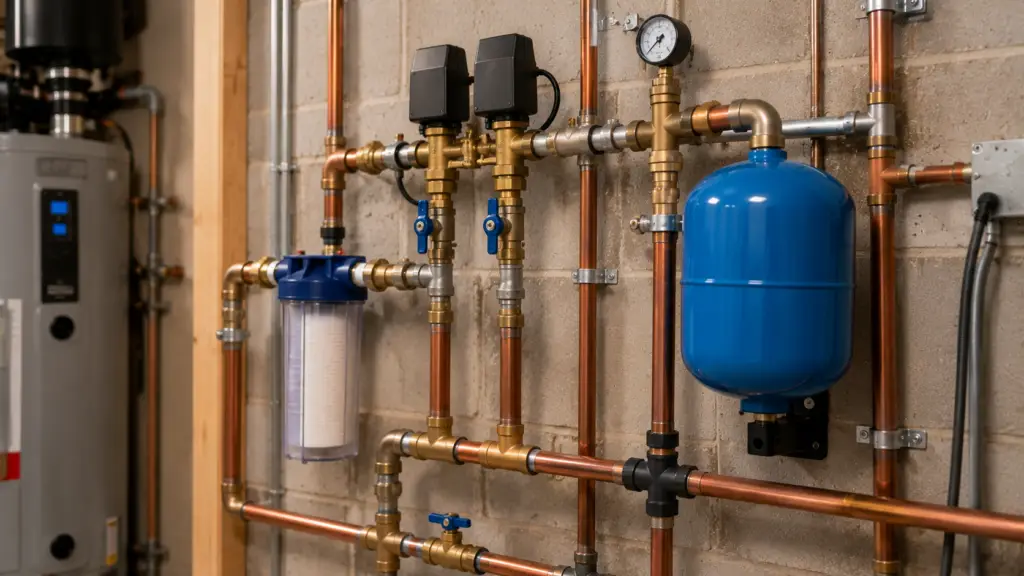
Code requirements, safety devices, mixing valves, backflow protection, expansion control, and installation clearances may also be more involved in commercial applications. Contractors need to consider not only the water-heating unit but also the entire system around it.
Maintenance expectations are different, too. A homeowner may want a simple system with minimal upkeep. A commercial customer may need a system that can be serviced quickly, handle heavy use, and reduce downtime. Accessibility, isolation valves, service clearances, and replacement planning all matter.
Water quality affects both residential and commercial systems. Hard water can create scale and reduce performance, especially in tankless and high-demand applications. Commercial systems may require a more robust maintenance plan because equipment runs more frequently.
Hartsig Supply supports contractors with domestic hot water products for both residential and commercial projects. Our team can help with tankless water heaters, commercial water heating products, storage tanks, recirculation components, Demand Duo applications, and system guidance.
The biggest difference between residential and commercial hot water systems is demand. Commercial systems often require greater capacity, more planning, and closer attention to system design. When contractors evaluate the application carefully, they can choose equipment that supports reliable hot water and better long-term performance.