Sizing a domestic hot water system should always begin with real demand. Too often, equipment is selected based on what was there before, what fits the space, or what seems close enough. But hot water systems need to be designed around how the building actually uses hot water.
For contractors, proper sizing helps prevent complaints, improve system performance, and reduce the chance of callbacks.
The first step is understanding the application. A single-family home, multi-family building, restaurant, office, salon, church, school, shop, or commercial facility will each have different hot water needs. Fixture count matters, but usage patterns matter just as much.
A home may have peak demand in the morning or evening when showers, laundry, and dishwashing overlap. A restaurant may need hot water throughout the day for dishwashing, hand sinks, cleaning, and food service needs. A salon may require a steady supply of hot water at multiple stations. A commercial building may have periods of high demand followed by lower usage.
Flow rate is one of the most important sizing factors. Contractors need to estimate how many fixtures or pieces of equipment may require hot water at the same time. This helps determine the gallons per minute needed from the system.
Temperature rise is also critical. The system must raise incoming water to the desired outlet temperature. In Michigan, incoming water can be colder during parts of the year, which affects equipment performance. Tankless water heaters, in particular, will deliver different flow rates depending on the temperature rise.
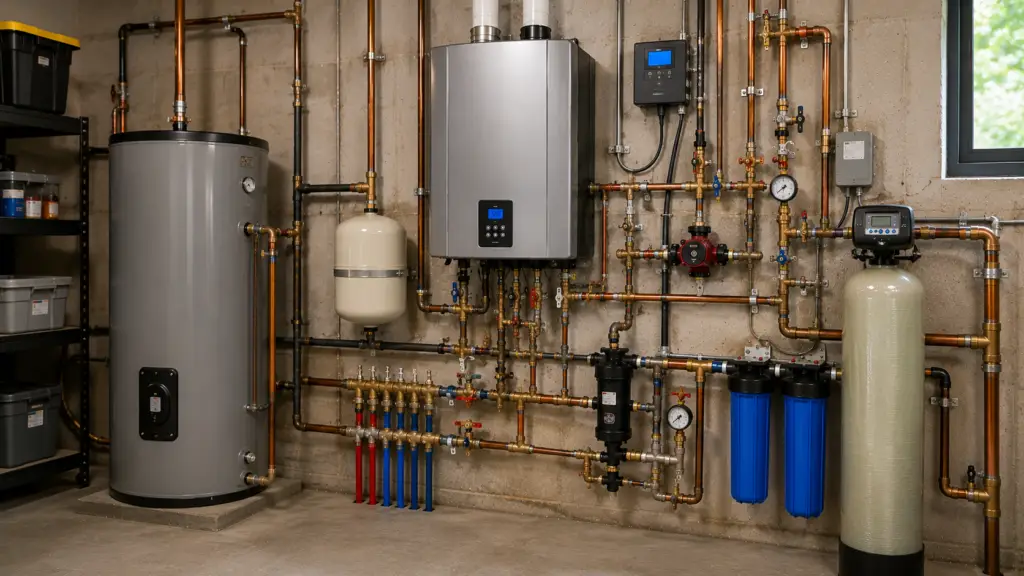
Storage needs should also be evaluated. Some systems require hot water storage because demand comes in bursts. Other systems may be able to use tankless equipment or a hybrid setup. Storage tanks, commercial water heaters, tankless systems, and Demand Duo-style solutions all serve different needs.
Recovery rate is another consideration. Recovery is how quickly the system can heat more water after hot water is used. In high-demand applications, recovery can be just as important as storage capacity.
Recirculation can affect sizing, too. A recirculation loop improves hot water delivery time but also increases heat loss. The water heater must be able to handle that load, and the system must be designed so recirculation does not create unnecessary equipment wear or energy waste.
Water quality should also be part of the sizing conversation. Hard water and scale can reduce performance over time, especially in tankless and high-demand systems. Contractors should consider whether treatment or maintenance planning is needed to protect the equipment.
Gas supply or electrical capacity must be verified before selecting equipment. A larger hot water system may require larger gas lines, venting changes, electrical upgrades, or installation adjustments. Ignoring these requirements can create major issues during installation.
Contractors should also consider redundancy in commercial applications. Some buildings cannot afford to lose hot water entirely if a single unit fails. Multiple units, staged systems, or storage designs may provide better serviceability and reliability.
Hartsig Supply supports contractors with guidance on domestic hot water products, tankless water heaters, commercial water-heating equipment, storage tanks, recirculation components, Demand Duo applications, and system support.
The goal is not just to install a water heater. The goal is to provide a hot water system that matches the building’s demand. When contractors size around real usage, they can improve customer satisfaction, reduce callbacks, and build systems that perform reliably over time.