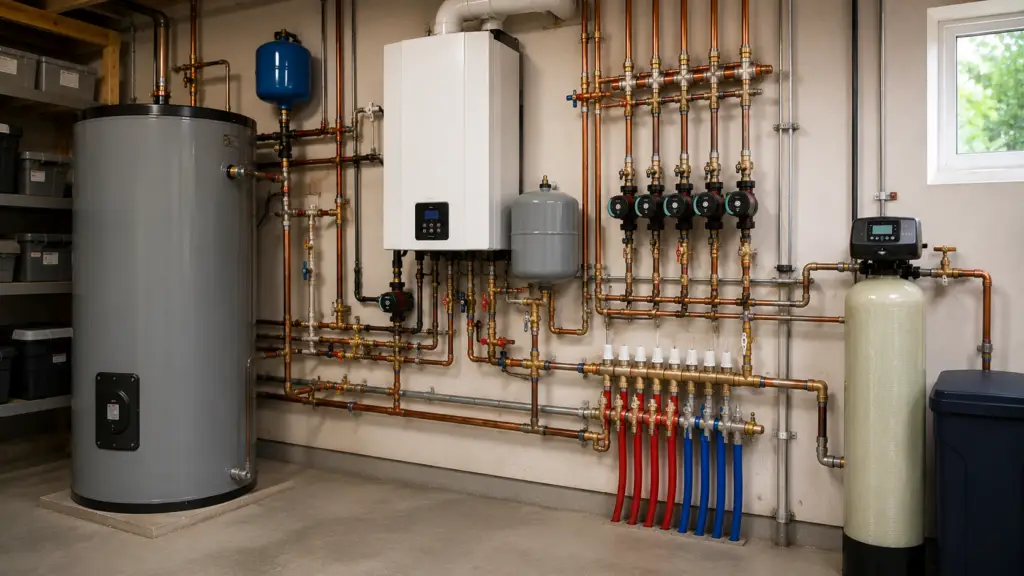
A hydronic heating system depends on more than the boiler. The boiler creates heat, but the rest of the system controls where that heat goes, how it moves, how pressure is managed, and how the building stays comfortable. For contractors, understanding how boilers, combi boilers, and system components work together is critical for reliable performance.
A boiler is the heat source for many hydronic systems. It heats water, which is then circulated through the building to deliver heat through baseboards, radiators, radiant floor tubing, fan coils, or other heat emitters. Boiler selection depends on the building load, fuel source, venting requirements, efficiency goals, water temperature needs, and system layout.
A combi boiler combines space heating and domestic hot water production in one unit. These systems can be a good fit in certain residential or light commercial applications, especially where space is limited. However, combi boilers must be sized carefully. The unit has to support both the heating load and the domestic hot water demand. In some applications, the domestic hot water demand may drive the sizing more than the heating load.
Pumps or circulators move water through the system. The right circulator depends on flow rate, head loss, piping layout, zoning, and system design. If the pump is not sized correctly, the system may have uneven heat, noise, poor performance, or unnecessary energy use.
Expansion tanks manage pressure changes as water heats and cools. Without a properly sized expansion tank, system pressure can rise too high, relief valves may discharge, and components may be stressed. Expansion tank sizing and placement are important details that affect long-term reliability.
Air separators, vents, and proper purge points help remove air from the system. Air in a hydronic system can cause noise, poor circulation, corrosion, and heat transfer problems. Good air management makes the system easier to start up and easier to maintain.
Controls determine how the system responds to demand. Thermostats, zone valves, relays, outdoor reset controls, boiler controls, mixing controls, and pump controls all affect performance. A well-designed control strategy can improve comfort and efficiency. A poorly planned control setup can cause short cycling, overheating, underheating, or customer complaints.
Buffer tanks may be needed in some systems, especially when the boiler output exceeds the load of the small zones. A buffer tank adds water volume and helps reduce short cycling. This can improve equipment life and system performance.
Mixing valves may be required when the system has different temperature needs. For example, radiant floor heating may require lower water temperatures than other heating zones. Mixing controls help deliver the correct water temperature to each part of the system.
Hydronic systems also rely on valves, manifolds, piping, insulation, drains, unions, gauges, and other smaller components. These pieces may seem simple, but they affect serviceability and reliability.
Hartsig Supply helps contractors source the products and components needed for hydronic heating systems. Our team can help with boilers, combi boilers, circulators, controls, expansion tanks, buffer tanks, radiant components, snow melt products, and system support.
A hydronic system works best when all the components are selected to work together. Contractors who think beyond the boiler can build systems that are cleaner, more efficient, easier to service, and more reliable for the customer.