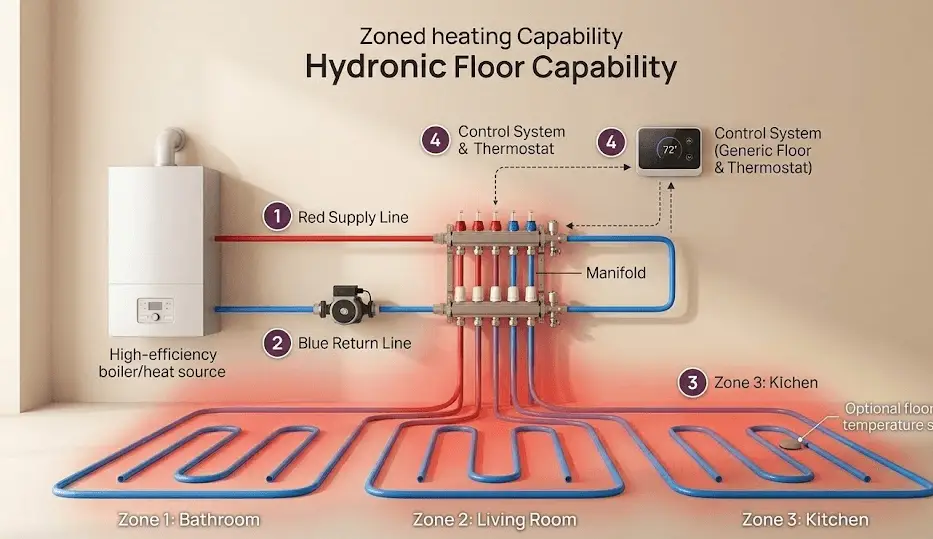
Hydronic heating callbacks often come from system design issues, not just equipment failure. A boiler may be working, but the building may still have uneven heat. A circulator may be running, but the flow may not be correct. A radiant zone may be installed, but the floor may not heat evenly. These problems usually point back to design, sizing, controls, or component selection.
For contractors, proper hydronic design is one of the best ways to reduce callbacks and protect customer satisfaction.
A good hydronic system starts with proper equipment sizing. If a boiler is oversized, it may short-cycle, reduce efficiency, and wear faster. If it is undersized, it may not keep up during colder conditions. The system should be designed around the building’s heat load, not just the size of the old equipment.
Flow is another common source of issues. Every hydronic system needs the right flow through each zone or loop. If the flow is too low, heat may not be delivered properly. If the flow is too high, the system may become noisy or harder to control. Circulator selection should be based on required flow and head loss.
Water temperature also matters. Different heat emitters need different temperatures. Radiant floor heating, baseboard heating, radiators, fan-coil units, and snowmelt systems may all have different requirements. Mixing controls, outdoor reset, or separate temperature zones may be needed to keep the system operating properly.
Air in the system can create major problems. Air can cause noise, poor circulation, corrosion, and uneven heating. Proper air separation, venting, purge points, and piping practices help the system start up cleaner and operate more reliably.
Expansion control is also important. Water expands as it heats. A properly sized expansion tank helps manage pressure changes. If the expansion tank is undersized, failed, or incorrectly placed, the system may experience pressure swings, relief valve discharge, or other problems.
Controls can make or break a hydronic system. Thermostats, zone valves, circulator relays, boiler controls, outdoor reset, mixing controls, and snow melt controls all need to work together. A poor control strategy can lead to short cycling, overheating, underheating, comfort complaints, or inefficient operation.
Buffer tanks may help reduce callbacks in systems with small zones or low water volume. When a boiler has more output than the zone can absorb, short cycling may occur. A buffer tank can add volume and help the system run more smoothly.
Serviceability should be part of the design. Isolation valves, unions, drains, gauges, clearances, and organized piping make future service easier. A system that is hard to service is more likely to create frustration later.
Contractors should also think about customer expectations. Hydronic systems often operate differently than forced-air systems. Radiant floors may take longer to respond. Snow melt systems may need time to warm the surface. Customers should understand how the system is designed to operate.
Hartsig Supply helps contractors with hydronic heating products, system components, sizing questions, controls, circulators, expansion tanks, buffer tanks, radiant components, snow melt products, and technical support.
Proper hydronic design reduces callbacks by solving problems before they arise. When the equipment, piping, pumps, controls, and components are selected to work together, the system is more reliable, more comfortable, and easier to maintain.
For contractors, spending time planning hydronic systems up front can save hours of troubleshooting later.