A water system can show signs of trouble before it fails completely. For contractors, recognizing these warning signs can help identify problems early, explain issues to customers, and choose the right repair or replacement approach.
One of the most common signs of a water system problem is low water pressure. Customers may notice weak flow at faucets, showers, hose bibs, or appliances. Low pressure can be caused by several issues, including a failing pump, clogged filters, undersized piping, pressure tank problems, pressure switch issues, water treatment restrictions, or a well that cannot keep up with demand.
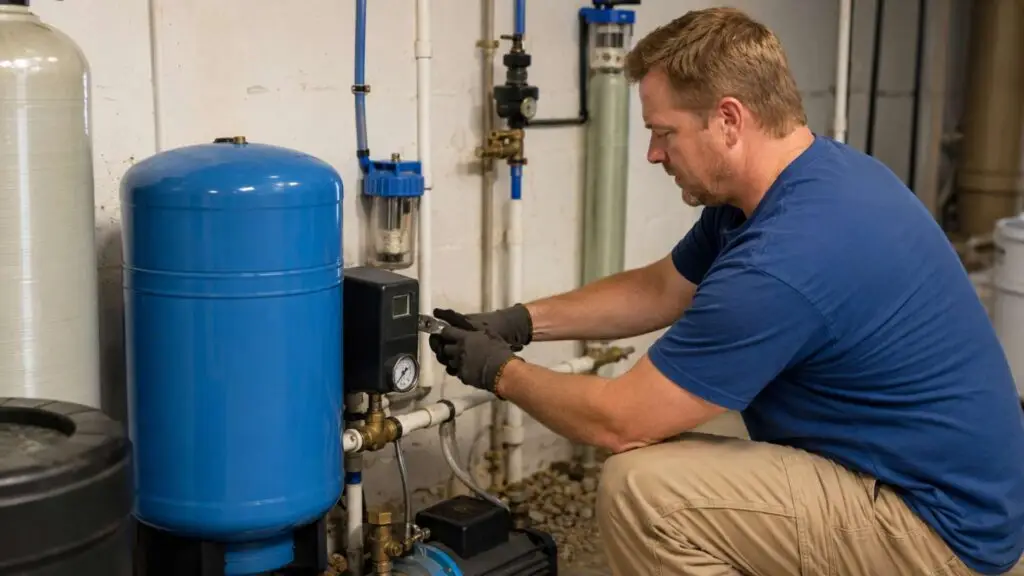
Another common warning sign is pressure fluctuation. If water pressure rises and falls noticeably during normal use, the system may not be operating correctly. Pressure swings can be caused by a faulty pressure tank, incorrect air charge, pump control issues, clogged equipment, or a problem with the pressure switch.
Rapid pump cycling is also a major red flag. A pump that turns on and off too frequently may be due to a waterlogged pressure tank, an undersized tank, pressure switch problems, leaks, or an improper system setup. Short cycling can reduce pump life and lead to more expensive repairs if ignored.
No water at all is an obvious problem, but the cause is not always obvious. A no-water condition can be caused by pump failure, electrical issues, a failed pressure switch, a tripped breaker, broken wiring, low well yield, a failed control box, or a major leak. Contractors should evaluate the system carefully before assuming the pump is the only issue.
Air in the water is another sign of trouble. Customers may notice sputtering faucets, bursts of air, or cloudy water that clears after sitting. Air can enter the system due to low water levels, well issues, suction-side leaks on a jet pump, pressure tank problems, or other system conditions.
Dirty, cloudy, rusty, or discolored water can also indicate a problem. Sometimes these points refer to water quality issues. Other times it may be related to the well, sediment, iron, plumbing materials, water treatment equipment, or changes in the water source. Water testing and system review may be needed.
Unusual noises should not be ignored. Clicking, humming, banging, vibrating, or repeated pump starts can point to electrical issues, pressure tank problems, water hammer, failing components, or improper controls.
High electric bills can also be connected to water system issues. A pump that runs too often, short cycles, or struggles to maintain pressure may use more electricity than normal. If the pump is running when no water is being used, there may be a leak, control issue, or system failure.
Customers may also report that water pressure gets worse when multiple fixtures are used at once. This can indicate an undersized pump, limited well yield, restricted piping, clogged filters, or equipment that cannot handle peak demand.
Hartsig Supply helps contractors address water system questions by supporting product selection for pumps, pressure tanks, constant-pressure systems, controls, fittings, water treatment products, and related components.
A water system issue is not always caused by one part. Pumps, tanks, controls, filters, valves, piping, and the well itself all work together. Contractors who look at the full system can diagnose problems more accurately and recommend better solutions.
Recognizing the warning signs early helps prevent larger failures, reduce callbacks, and keep customers supplied with reliable water.