Hydronic heating systems can provide efficient, comfortable heat when they are properly designed and installed. But these systems require careful planning. Boilers, pumps, controls, expansion tanks, piping, manifolds, mixing valves, and heat emitters all need to work together.
For contractors, good hydronic design starts with understanding the building, the heat load, the type of system, and the performance goals. Product selection matters, but the layout and system design are just as important.
At Hartsig Supply, we help contractors think through hydronic heating applications and select products that support reliable system performance.
Start With the Heat Load
A hydronic system should be designed around the actual heating needs of the building. The heat load helps determine boiler sizing, zone requirements, flow rates, water temperatures, and component selection.
Oversized equipment can lead to short cycling, reduced efficiency, comfort issues, and premature wear. Undersized equipment may struggle to maintain temperature during peak demand.
Before selecting a boiler or major system component, contractors should understand the heating requirement of the space.
Boiler Selection Matters
Boiler selection depends on the application, heating load, fuel type, efficiency goals, venting requirements, domestic hot water needs, and system design.
Common options may include:
- Boilers
- Combi boilers
- Condensing boilers
- Non-condensing boilers
- Commercial boilers
- Boiler systems paired with indirect tanks
The right boiler depends on how the system will be used. A residential radiant floor system, snow melt system, commercial heating application, and domestic hot water combination system all have different requirements.
Understand System Temperature
Hydronic systems can operate at different water temperatures depending on the heat emitters and design.
Radiant floor heating typically uses lower water temperatures. Baseboard systems may require higher temperatures. Snow melt systems have their own design considerations. Some systems may require mixing valves or controls to manage different temperature zones.
Water temperature affects comfort, efficiency, boiler performance, and system design.
Pump and Flow Requirements
Proper circulation is critical in hydronic heating. Pumps need to be selected based on flow rate, head loss, piping layout, and system requirements.
Too little flow can cause poor heat transfer, uneven temperatures, or system performance issues. Too much flow can create noise, erosion, or unnecessary energy use.
Pump selection should be based on the system, not guesswork.
Contractors should consider:
- Required flow rate
- Head loss
- Zone layout
- Pipe size
- Pump location
- Control strategy
- Variable speed options
- Primary-secondary piping needs
Expansion Tanks and Air Management
Expansion tanks help manage pressure changes as water heats and cools. Proper sizing and placement are important for system reliability.
Air management is also critical. Air in a hydronic system can cause noise, poor circulation, corrosion, and reduced performance. Air separators, vents, and proper piping practices help keep systems operating smoothly.
These components may not be the most visible parts of the system, but they play a major role in long-term performance.
Zoning and Controls
Controls are a major part of hydronic system performance. A properly controlled system can improve comfort, efficiency, and reliability.
Control considerations may include:
- Thermostats
- Zone valves
- Circulator relays
- Outdoor reset controls
- Mixing controls
- Boiler controls
- Snow melt controls
- Smart control systems
The more complex the system, the more important the control strategy becomes.
Good controls help the system respond correctly to demand.
Radiant Floor Heating
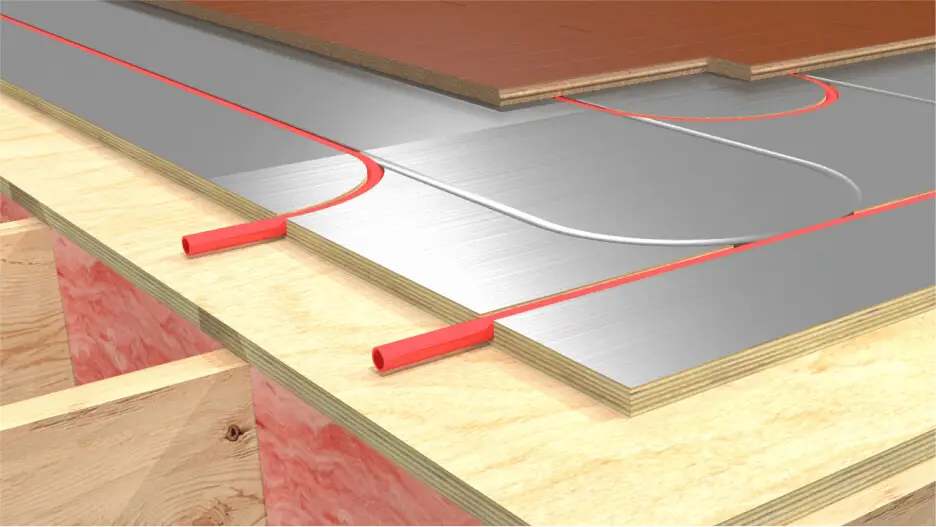
Radiant floor heating can provide even, comfortable heat, but it requires careful planning.
Contractors should consider tubing layout, spacing, insulation, water temperature, manifold placement, flow rates, floor coverings, and control zones.
Radiant systems are not just about installing tubing. The system needs to be designed for the space, heat load, and construction type.
Snow Melt Systems
Snow melt systems are another hydronic application that requires proper design. These systems need to account for outdoor conditions, surface area, tubing layout, glycol, controls, heat output, and response time.
A snow melt system that is not properly designed may underperform, run inefficiently, or fail to meet customer expectations.
Product selection and system design support are especially important in these applications.
Buffer Tanks and System Volume
Some hydronic systems may require a buffer tank to add system volume and reduce short cycling. This is especially important when boiler output does not match small zone loads.
Buffer tanks can improve comfort, efficiency, and equipment life when used correctly.
Contractors should evaluate whether the system has enough water volume and whether a buffer tank would improve performance.
Domestic Hot Water Integration
Some hydronic systems also support domestic hot water through combi boilers, indirect tanks, or integrated systems.
When domestic hot water is part of the design, contractors must consider peak demand, flow rate, storage, recovery, recirculation, and priority controls.
Heating and hot water needs should be evaluated together so the system performs properly in both modes.
Good Design Reduces Callbacks
Hydronic systems can be very reliable when designed correctly. Many problems come from incorrect sizing, poor piping layout, inadequate flow, improper controls, air issues, or mismatched components.
Taking time to plan the system upfront can prevent:
- Uneven heating
- Short cycling
- Noisy operation
- Poor efficiency
- Pressure issues
- Circulation problems
- Customer complaints
- Premature equipment failure
Need Help With Hydronic Heating Products?
Hartsig Supply supports contractors with hydronic heating products, boilers, combi boilers, radiant floor components, snow melt products, buffer tanks, expansion tanks, controls, pumps, and related system components.
Our team can help contractors think through product selection, sizing, layout considerations, and system design support.
Call Hartsig Supply: 248-852-3900