Radiant floor heating and snow melt systems are two hydronic applications that require careful planning. Both use heated fluid moving through tubing, but the goals, conditions, and design requirements are different. For contractors, understanding those differences helps with product selection, system layout, controls, and customer expectations.
Radiant floor heating is designed to provide comfortable heat from the floor up. Tubing is installed in or under the floor, and warm water circulates through the tubing to heat the space. This can create even, comfortable heat without relying only on forced air.
The first consideration for radiant floor heating is the heat load. The system must be designed around the space’s heating needs. Floor covering, insulation, room size, outdoor conditions, construction type, and desired indoor temperature all affect the design.
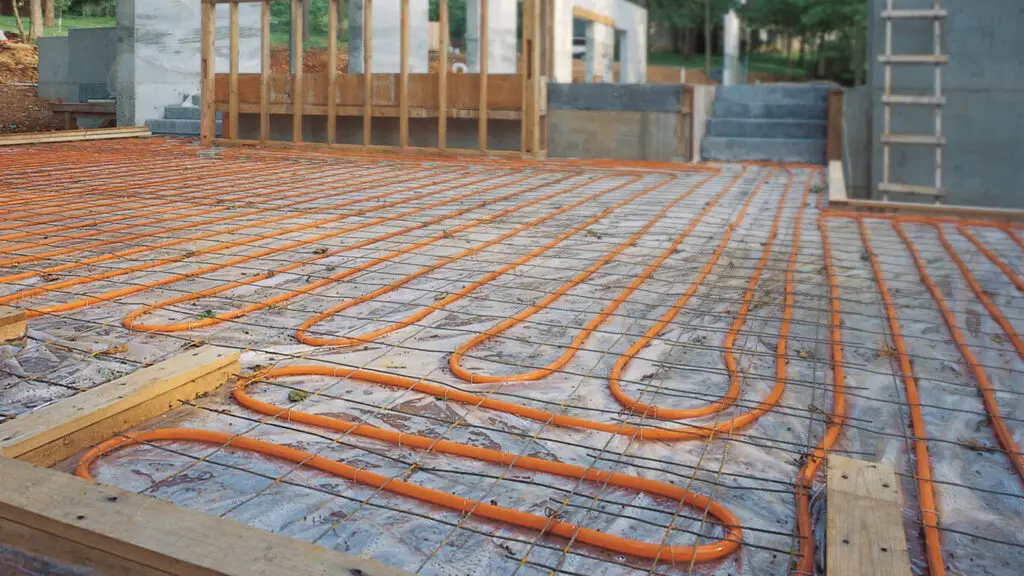
Tubing layout matters. Spacing, loop length, flow rate, manifold location, and floor construction all affect performance. If the tubing is spaced too far apart, the floor may not heat evenly. If loops are too long, flow can become difficult to manage. If insulation is missing or poorly installed, heat can be lost in the wrong direction.
Water temperature is another important factor. Radiant floor systems often operate at lower water temperatures than other hydronic systems. Contractors may need mixing valves or controls to deliver the correct supply temperature. Extreme temperatures can cause comfort issues or damage certain flooring materials.
Controls help radiant systems operate properly. Each zone may need its own thermostat, manifold actuator, or control strategy depending on the layout. Radiant systems can respond more slowly than forced-air systems, so expectations should be explained to the customer.
Snow melt systems have a different purpose. Instead of heating indoor space, they are designed to melt snow and ice from driveways, sidewalks, loading areas, ramps, or other exterior surfaces. These systems need to overcome outdoor conditions, surface area, snowfall rate, wind, and temperature.
Snow melt design depends on tubing layout, slab construction, insulation, fluid temperature, glycol requirements, boiler capacity, controls, and response time. These systems can require significant heat output, so proper sizing is critical.
Controls are especially important for snow melt systems. Some systems use sensors that detect moisture and temperature to activate automatically. Others may use manual controls or timers. The control strategy affects performance and energy use.
Glycol is commonly used in snow melt systems to protect the fluid from freezing. Contractors need to consider glycol concentration, compatibility, pumping requirements, and maintenance. Glycol changes system performance, so pump sizing and heat transfer should be reviewed.
Both radiant floor and snow melt systems require careful installation. Tubing must be protected, properly spaced, pressure tested, and installed according to the design. Once tubing is embedded in a slab or floor assembly, repairs can be difficult.
Hartsig Supply supports contractors with radiant floor heating products, snow melt components, manifolds, tubing, controls, pumps, boilers, mixing components, and system design assistance. Our team helps contractors think through product selection and application needs.
Radiant floor heating and snow melt systems can perform extremely well when planned correctly. The key is designing around the application, not simply installing tubing and hoping for the best. Contractors who focus on load, layout, controls, water temperature, and system components can deliver better comfort, better performance, and fewer callbacks.