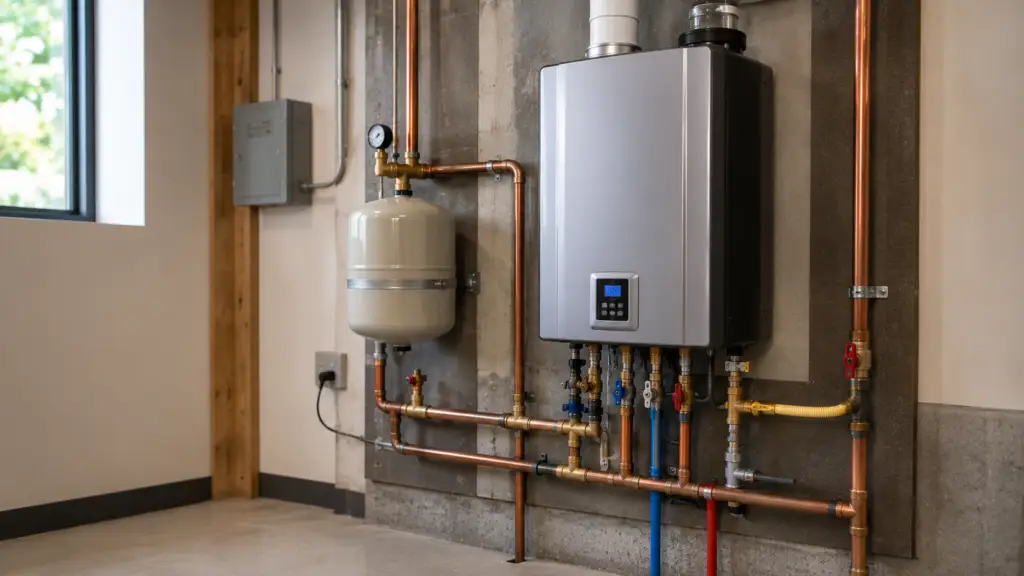
Tankless water heaters can be a great solution for many residential and commercial applications, but choosing the right unit takes more than picking a brand or matching the size of the old water heater. A tankless system needs to be selected based on real hot water demand, flow rate, temperature rise, venting requirements, gas supply, water quality, and how the customer actually uses hot water.
For contractors, the first question should always be: what does this system need to do?
A small home with one or two bathrooms has very different needs than a large residence, restaurant, salon, commercial building, or multi-fixture application. The number of fixtures matters, but usage patterns matter too. A system that serves one shower at a time differs from one that may need to support multiple showers, laundry, dishwashing, or commercial use at once.
Flow rate is one of the biggest factors in tankless water heater selection. Tankless units heat water as it passes through the system, so they must be able to deliver the required gallons per minute at the desired temperature. If demand exceeds what the unit can support, the customer may experience reduced temperature, inconsistent performance, or frustration during peak use.
Temperature rise is just as important. Temperature rise is the difference between the incoming water temperature and the desired outlet temperature. In colder climates, incoming water can be much colder, which means the tankless unit has to work harder to deliver hot water. A unit that performs well in a warmer region may not deliver the same flow rate in Michigan during colder months.
Gas supply is another key consideration. Tankless water heaters often require more gas input than traditional tank-style units. Contractors need to make sure the gas line, meter, regulator, and overall gas system can support the unit. An undersized gas supply can cause performance problems, ignition issues, or error codes.
Venting also matters. Tankless units have specific venting requirements that must be followed carefully. Vent material, length, termination location, combustion air, and manufacturer guidelines all need to be considered. A great unit installed with poor venting can create serious performance and safety issues.
Water quality should not be ignored. Hard water and scale buildup can affect tankless performance and shorten equipment life. In areas with hard water, contractors should consider whether water treatment, scale prevention, or maintenance planning is needed. Customers should also understand that tankless units require periodic maintenance.
Commercial applications add even more considerations. Restaurants, apartment buildings, offices, salons, and other facilities may need multiple units, storage, recirculation, or a more advanced system design. In these cases, sizing should be based on actual demand, peak usage, fixture load, and recovery expectations.
Recirculation is another factor. Customers often expect fast, hot water at the fixture. Depending on the building layout, a tankless system may need recirculation support to improve delivery time. But recirculation must be designed correctly so it does not create unnecessary wear or reduce efficiency.
At Hartsig Supply, we help contractors think through domestic hot water applications before selecting equipment. Our team can help with tankless water heater options, commercial hot water products, storage tanks, recirculation components, and system support.
A tankless water heater can be an effective solution when properly sized and installed. The key is to match the equipment to the application, not to guess. When contractors consider flow rate, temperature rise, gas supply, venting, water quality, and customer expectations, they can design hot water systems that perform reliably.